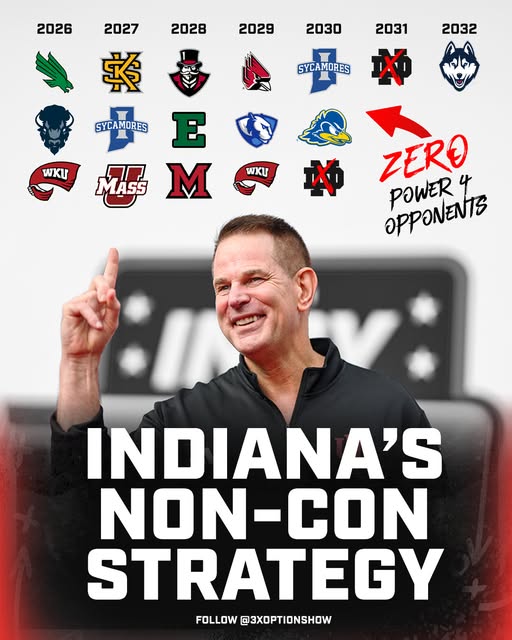
🚨 Hoosiers Shock Fans: Drop Notre Dame, Zero Non-Power 4 Opponents Until 2031 — Is Indiana Giving Up on Big-Time Wins? Find Out Why Everyone’s Talking!
In a move that has sent shockwaves through college football circles, the Indiana Hoosiers have officially removed Notre Dame from their future scheduling plans, and, even more startling, they currently have no non-Power 4 opponents scheduled until at least 2031. This decision has ignited intense debate among fans, analysts, and former players alike. Is Indiana signaling a shift in strategy? Are they giving up on big-time wins? Or is there a deeper, more strategic reason behind this controversial scheduling decision?
Let’s delve into the details, the reactions, and what this could mean for Indiana’s football program moving forward.
The Background: Indiana’s Scheduling Strategy
Historically, Indiana football has operated within the Big Ten Conference, often struggling to establish a consistent winning culture. Non-conference scheduling has traditionally been a mixed bag—sometimes including big-name opponents like Notre Dame, other times opting for easier matchups to bolster win totals or development opportunities.
Notre Dame, a perennial football powerhouse and independent, has been a marquee opponent for Indiana, drawing national attention and providing a high-profile challenge. For years, the Irish and Hoosiers played sporadically, but the series was viewed as a valuable opportunity for Indiana to test itself against elite competition.
However, recent developments suggest Indiana is shifting its focus away from marquee non-conference games with traditional rivals like Notre Dame. The decision to drop Notre Dame from future schedules and the absence of non-Power 4 opponents until 2031 signals a potential change in philosophy.
The Details: What Exactly Has Changed?
The key points of the recent scheduling announcement are:
Notre Dame removed from future schedules: Indiana will not face Notre Dame at least until after 2031.
No non-Power 4 opponents scheduled until at least 2031: The Hoosiers will only face Power 5 opponents within their conference or scheduled league games, avoiding non-Power 4 teams altogether for nearly a decade.
Strategic scheduling move? Possibly. The team might be prioritizing conference play, development, or other factors over high-profile non-conference games.
This shift raises many questions: Why would Indiana, a program historically seeking to elevate its national profile, opt to avoid big-name non-conference opponents? Is this purely a financial or strategic decision? Or does it reflect a broader philosophy about building the program from within?
Why Are Fans and Analysts Shocked?
The reaction has been swift and intense:
Disappointment from fans: Many see non-conference games against teams like Notre Dame as vital opportunities to showcase Indiana’s talent on a national stage. Dropping such opponents could be perceived as a step backward in elevating the program’s prestige.
Concerns about competitiveness: Critics argue that avoiding high-caliber opponents may hinder Indiana’s ability to improve and attract recruits.
Financial implications: High-profile games often bring significant revenue. Not facing big-name opponents could impact the program’s financial health.
Historical significance: For decades, Indiana has been trying to carve out a stronger identity in college football. Omitting marquee games might be seen as a missed opportunity.
However, supporters of the move argue that:
Focusing on conference success: By concentrating on Big Ten opponents, Indiana could aim for a more consistent path to bowl games and conference championships.
Reducing the risk of blowout losses: Scheduling weaker opponents might help build confidence and record.
Long-term planning: Perhaps Indiana is re-evaluating its approach to scheduling, prioritizing stability and player development over marquee matchups.
Is Indiana Giving Up on Big-Time Wins?
One of the most provocative questions surrounding this move is whether Indiana is abandoning its pursuit of big-time wins. Historically, victories against powerhouses like Notre Dame or top-tier non-conference opponents have been rare for Indiana, which has struggled to reach bowl games and contend for championships.
By avoiding non-Power 4 opponents until 2031, some interpret this as a signal that Indiana is lowering its ambitions for national relevance in the short term. Instead, they might be focusing on building a solid foundation within the Big Ten, aiming for consistent bowl appearances and improving recruiting within the conference.
Others believe this is a strategic retreat—a way to avoid potential blowouts, preserve confidence, and build a more competitive team before stepping back into the national spotlight with bigger games down the line.
The Broader Context: College Football Landscape
This scheduling move must also be viewed within the broader college football environment:
Power 5 dominance: Many programs are reevaluating their non-conference schedules, especially after the expanded playoff format, which rewards conference success and can devalue non-conference wins.
Financial considerations: The rising costs of scheduling high-profile opponents, travel logistics, and potential for losses may be influencing Indiana’s decision.
Conference strength: The Big Ten has become one of the most competitive leagues, with multiple playoff contenders. Indiana might be prioritizing conference games to improve its standing.
Potential Risks and Rewards
Risks:
Reduced national exposure: Without marquee games, Indiana’s national profile could diminish.
Recruiting challenges: Top recruits often want to play against elite opponents for exposure and development.
Long-term stagnation: Avoiding big games could lead to complacency and stagnation.
Rewards:
Stability and confidence: Playing weaker opponents allows for building momentum.
Focus on conference success: Better positioning within the Big Ten.
Financial savings: Reduced travel and opponent costs.
What Does the Future Hold?
Indiana’s decision to eliminate non-Power 4 opponents until at least 2031 is bold and controversial. It raises questions about the program’s ambitions and strategic direction.
Will this lead to sustained success within the Big Ten? Will it hinder recruiting and national relevance? Or is it a calculated move to rebuild the program from the ground up? Only time will tell.
A Divisive but Strategic Move
In college football, scheduling is often a reflection of a program’s ambitions and philosophy. Indiana’s recent move suggests a focus on internal growth, conference stability, and perhaps a long-term plan for resurgence.
However, it also risks alienating fans who crave the excitement of marquee matchups and the prestige that comes with big-time wins. The decision has sparked a heated debate: Is Indiana giving up on competing at the highest level now, or are they setting the stage for a bigger comeback down the road?
As college football continues to evolve, Indiana’s scheduling strategy will be closely watched. Whether this move pays off or becomes a cautionary tale, one thing is certain: fans and analysts will be talking about this decision for years to come.


