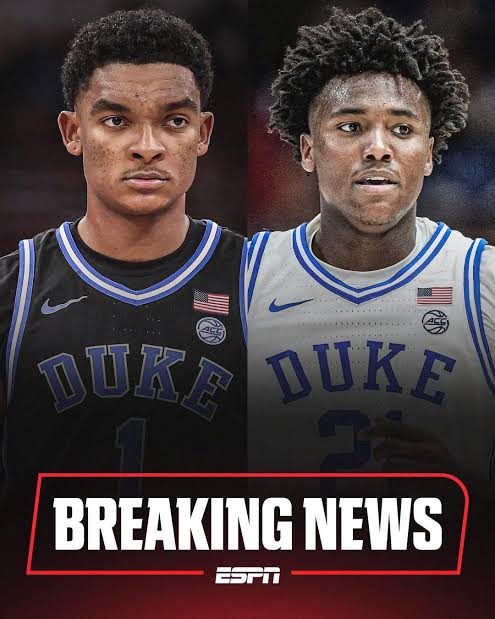
Duke Guard Caleb Foster Sidelined by Ankle Injury, but Coach Jon Scheyer Expects Him Back for the November 2 Season Opener Against Army!
Duke basketball has received an important injury update ahead of the 2026–27 college basketball season, as guard Caleb Foster is temporarily sidelined with an ankle injury. The news was shared by head coach Jon Scheyer during ACC Tipoff, prompting attention from Blue Devils fans eager to see the team’s roster at full strength when the regular season begins.
Although Foster’s temporary absence is something Duke supporters will be watching closely, there is an encouraging development. According to the update provided, Foster is expected to make a full recovery in time for Duke’s regular-season opener against Army on November 2.
For a program with high expectations and a demanding schedule ahead, the timing of an injury can quickly become a major talking point. However, the expectation that Foster will return before the opening game offers a positive outlook as Duke continues preparing for the new campaign.
Caleb Foster’s Ankle Injury Becomes a Talking Point at ACC Tipoff
ACC Tipoff provides coaches and players with an opportunity to discuss their teams, expectations, and preparations for the upcoming season. This year, Duke head coach Jon Scheyer used the event to share an update about Foster’s availability.
The guard is temporarily out of action because of an ankle injury. While the announcement means Duke must account for his absence during the recovery period, it does not necessarily suggest that he will miss the start of the regular season.
The most encouraging part of the update is the expectation that Foster will recover in time for the November 2 matchup against Army.
Injuries are an unavoidable part of competitive basketball. Even during preseason preparations, players can experience setbacks that interrupt their training schedules and limit their opportunities to build rhythm with teammates. For coaches, the challenge is to balance the desire to prepare the entire roster with the responsibility of allowing injured players the time they need to recover.
Scheyer and the Duke coaching staff will have to manage Foster’s situation carefully while continuing to prepare the team for its opening contest.
For fans, the key question is not simply how long Foster will remain unavailable, but whether he can return fully healthy and ready to contribute when the games begin to count.
Why Caleb Foster’s Availability Matters to Duke
Every player has a role to play in building a successful college basketball team. Guards, in particular, can influence the rhythm of an offense by helping move the ball, creating opportunities, maintaining possession, and supporting teammates on both ends of the floor.
Foster’s temporary absence gives Duke another challenge to manage as the team prepares for the new season.
When a guard is unavailable, other players may need to take on additional responsibilities during practices and preseason games. Those opportunities can help the coaching staff evaluate the roster, but they can also require adjustments to rotations and offensive combinations.
For Scheyer, the immediate priority will be ensuring that Duke continues to make progress while Foster works toward his return.
The team must remain prepared regardless of which players are available on a particular day. That means maintaining practice intensity, developing communication between teammates, and ensuring that players understand their responsibilities within the system.
At the same time, Foster’s anticipated return could provide a welcome boost if he is medically cleared and ready to play before the season opener.
Duke supporters will naturally hope to see the guard back on the court, but the most important consideration is that his recovery proceeds appropriately.
Jon Scheyer Faces Another Preseason Decision
As Duke’s head coach, Scheyer must balance several priorities during the weeks leading into the regular season. He must prepare his players for competition, evaluate lineup combinations, establish team chemistry, and respond to developments that affect the roster.
Foster’s injury adds another consideration to that process.
When a player temporarily steps away from basketball activities, coaches often need to reconsider how they organize practices and distribute opportunities among the available players. Other guards may receive more repetitions, while younger players could have additional chances to demonstrate their readiness.
That does not automatically mean Foster will lose his place or that another player will replace him permanently. Instead, it gives Duke an opportunity to maintain its preparation while allowing the injured guard to focus on getting healthy.
A strong team needs more than a talented starting lineup. It also needs players who can adapt when circumstances change.
Duke’s ability to handle Foster’s temporary absence could help the coaching staff better understand the team’s depth before the opening game against Army.
Scheyer will also need to avoid rushing the recovery process simply because the season opener is approaching. The expectation of a November 2 return is encouraging, but the player’s actual availability will ultimately depend on his recovery and medical clearance.
The November 2 Matchup Against Army Takes on Added Importance
Duke’s regular-season opener against Army is scheduled for November 2, giving the Blue Devils a clear early-season target as they continue their preparations.
Season openers are important because they provide the first opportunity for a team to demonstrate how its preseason work translates into competitive basketball. Players must adjust to the pace of a real game, execute their assignments under pressure, and build confidence through experience.
For Duke, having Foster available would be an encouraging development, particularly as the team looks to establish its identity early in the campaign.
However, the Blue Devils must prepare for the possibility that the situation could change depending on how his recovery progresses. A projected return date is not the same as a guarantee that a player will be ready for full competition.
That distinction matters because ankle injuries can affect movement, balance, acceleration, and changes of direction—movements that are essential for guards in basketball.
A player may feel better during ordinary daily activities but still need additional time before returning to the demands of competitive play. The decision to resume basketball should therefore be based on appropriate medical guidance rather than the calendar alone.
If Foster is cleared to play by November 2, Duke could welcome him back as it begins its regular-season schedule. If he needs more time, the coaching staff will need to adjust accordingly.
Either way, the team’s preparation must continue.
Duke’s Other Guards Could Have an Opportunity to Step Up
One potential consequence of Foster’s temporary absence is that other Duke guards may receive additional opportunities to contribute during preseason preparations.
Those opportunities can be valuable. Players who see more minutes in practice may gain experience handling the ball, organizing offensive possessions, defending opposing guards, and communicating during high-pressure situations.
For the coaching staff, this period can also provide useful information about the team’s available options.
Depth is especially important over a long college basketball season. Teams must manage injuries, fatigue, difficult opponents, and the challenges that come with playing multiple games in a short period.
A roster with several players capable of handling meaningful responsibilities can be better equipped to respond when unexpected situations arise.
Still, it would be premature to suggest that any particular player will take over Foster’s role without further information from the coaching staff.
The most reasonable conclusion is that Duke has a temporary availability issue to manage, and the remaining guards may have an opportunity to show what they can contribute while Foster recovers.
That competition could benefit the team by encouraging players to remain prepared and focused.
Recovery Must Come Before Rushing Back
For Duke fans, the prospect of seeing Foster return for the season opener is understandably exciting. Nevertheless, the priority should be a complete and appropriate recovery.
An ankle injury can vary significantly in severity. Without additional medical details, it would be inappropriate to speculate about the precise nature of Foster’s injury, the treatment he is receiving, or the exact timetable for every stage of his rehabilitation.
What is known from the announcement is that he is temporarily sidelined and is expected to recover in time for the November 2 game against Army.
That expectation offers encouragement, but his progress should be assessed as recovery continues.
Returning too soon can create additional problems if an athlete has not regained the strength, mobility, and confidence required for competition. For a basketball guard, the ability to accelerate, stop suddenly, change direction, and defend against quick opponents is particularly important.
Duke’s medical and coaching staff will be responsible for evaluating whether Foster is ready to resume basketball activities and eventually return to game action.
Fans will be eager for updates, but patience may be necessary as the team works through the situation.
A healthy Foster who can contribute consistently would be more valuable over the course of the season than a player hurried back before he is ready.
What This Means for Duke’s 2026–27 Campaign
Duke enters the new season with expectations and attention surrounding its roster, coaching staff, and ambitions. Any injury involving a rotation player can quickly become a significant discussion point, particularly before the first official game.
Foster’s situation is worth monitoring, but it should also be viewed in perspective.
A temporary injury does not determine how an entire season will unfold. Teams frequently face setbacks during preseason preparations, and their responses can reveal important information about their depth, discipline, and ability to adapt.
For Duke, the coming weeks will provide an opportunity to continue developing its identity while monitoring Foster’s recovery.
The coaching staff can use the available practice time to strengthen team chemistry, evaluate different combinations, and ensure that players are ready for their responsibilities.
Meanwhile, Foster can focus on the steps necessary to return safely.
If he makes a full recovery in time for the Army matchup, Duke will have another reason for optimism as the regular season begins. If his return takes longer than expected, the team will need to remain flexible and rely on the players who are available.
The most important factor will be how effectively Duke manages the situation without losing sight of its broader preparation goals.
Duke Fans Will Be Watching for the Next Update
The injury announcement has given Duke supporters another storyline to follow as the regular season approaches.
Fans will be watching for information about Foster’s progress, his eventual return to practice, and whether he is cleared to play against Army on November 2.
For now, the outlook described by Scheyer is encouraging: Foster is temporarily sidelined with an ankle injury, but a full recovery before the season opener is expected.
That is positive news, although his availability will depend on how the recovery develops.
Duke’s preparations will continue in the meantime, and the coaching staff will have to make the best use of its available players.
The situation also highlights an important reality of college basketball: successful teams need to be ready for challenges long before the first official tipoff. Preparation, adaptability, and responsible injury management can all influence how a team begins its season.
Encouraging News, but Foster’s Recovery Remains Key
Caleb Foster’s ankle injury is an important development for Duke basketball as the Blue Devils approach the 2026–27 regular season. His temporary absence creates a challenge for Jon Scheyer and the coaching staff, but the expected recovery timeline offers a reason for optimism.
The goal now is to ensure that Foster receives the time and care necessary to return in good condition.
With Duke’s regular-season opener against Army set for November 2, the next stage of his recovery will attract considerable attention from supporters eager to see the guard back in action.
Until his return is confirmed, the team must continue preparing with the players available and remain ready to adjust if necessary.


